

Everything has an owner. Usually it's someone's personal phone.

Enquiries arrive on listing portals, WhatsApp, calls and walk-ins. The same person appears on each, and serious ones wait for a callback.

Moving a tenant in means chasing ID, income proof and a signed agreement. The file stalls on whatever was asked for last.

Tenants report repairs to whichever phone they saved. The same leak comes in three times, and looks like three small jobs.
We've built this before. It works over WhatsApp and email, and personal documents are seen only by the people who need them. Tenants agree before their details are stored.

Every channel lands in one list, one lead per person. Answers come from live availability, and qualified prospects get a visit booked.

Each tenant gets one checklist. Documents are checked for gaps and mismatched names, then chased. Approving the tenant stays with your team.

Requests land in one place, sorted by urgency, with repeats spotted and the right vendor sent. Your team approves the spend.
The obligation model reconstructed from the lease as amended, then the statement recomputed against it.
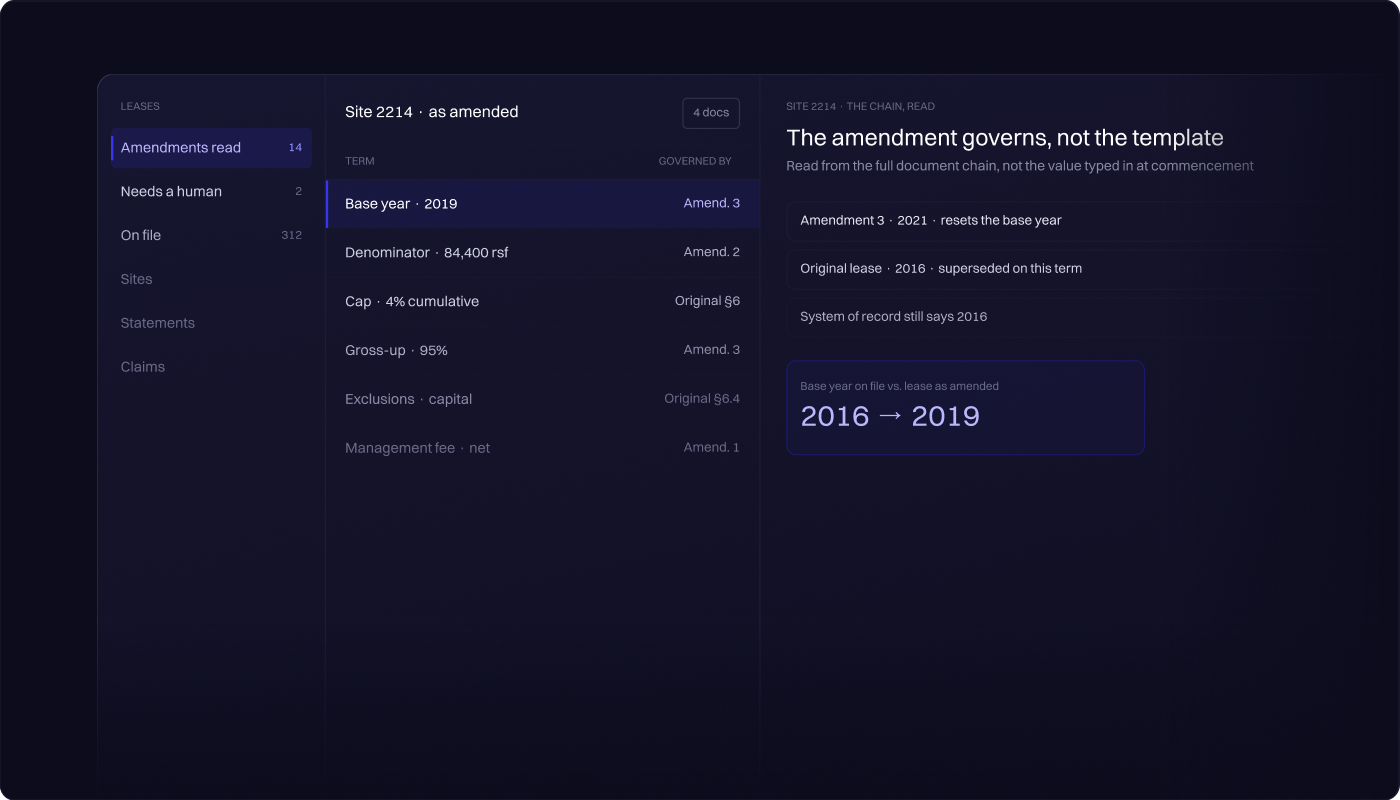
Your system computes from values someone typed in at commencement. The language that actually governs the base year sits in the third amendment, five years later. We read the chain, then use what it says.
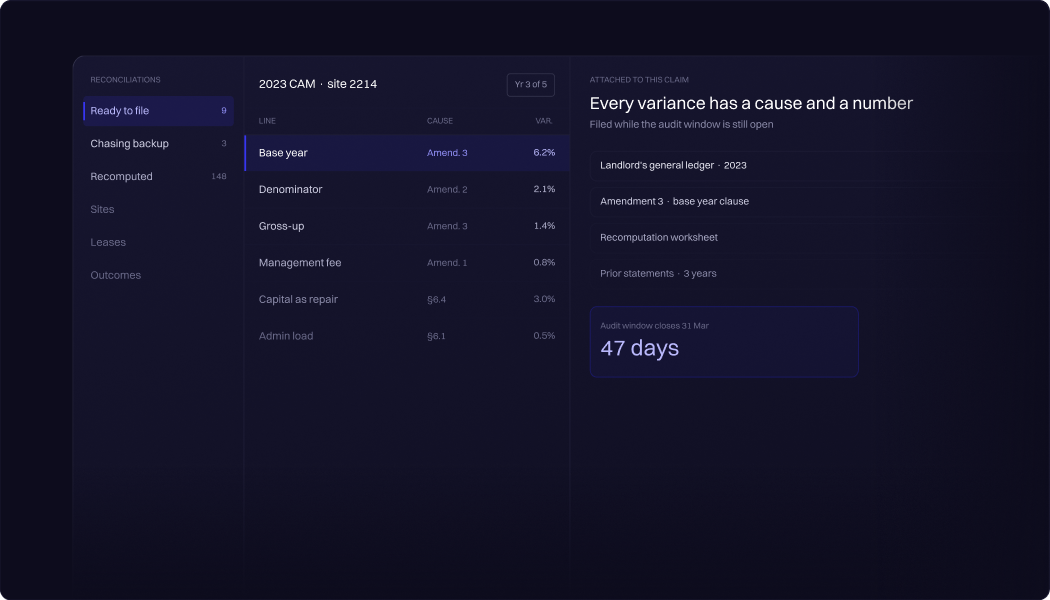
Each line of the recomputation is attributed to the clause it turns on, with the landlord's own ledger attached behind it. Filed while the audit window is still open.
Copyright © 2026 Nexigence AI, Inc. All rights reserved