

The charge was earned. It just never made the invoice.

Rate confirmations, the agreed price for each load, arrive as PDFs and emails. The extras they allow rarely make it into billing.

A truck waits hours at a dock. It's sorted by phone, and detention, the charge for that wait, never gets written down.

Invoices go out without proof. The customer disputes a charge, pays less than billed, and the difference is quietly written off.
The system reads your rate confirmations, gate logs and telematics, the truck's own location data, inside the tools already in use. Your team approves every invoice before it goes out.

Every rate confirmation is read into the load record, including the extras it allows, like waiting time, extra stops and redelivery.

Delays, waits and redeliveries are logged from calls, messages and gate times, matched to the load, and priced by the rate confirmation.

Each invoice goes out with its evidence attached: gate times, location data, the signed delivery receipt. Short-pays get flagged and disputed with proof.
The paper that arrives at the dock is the paper that gets you paid.
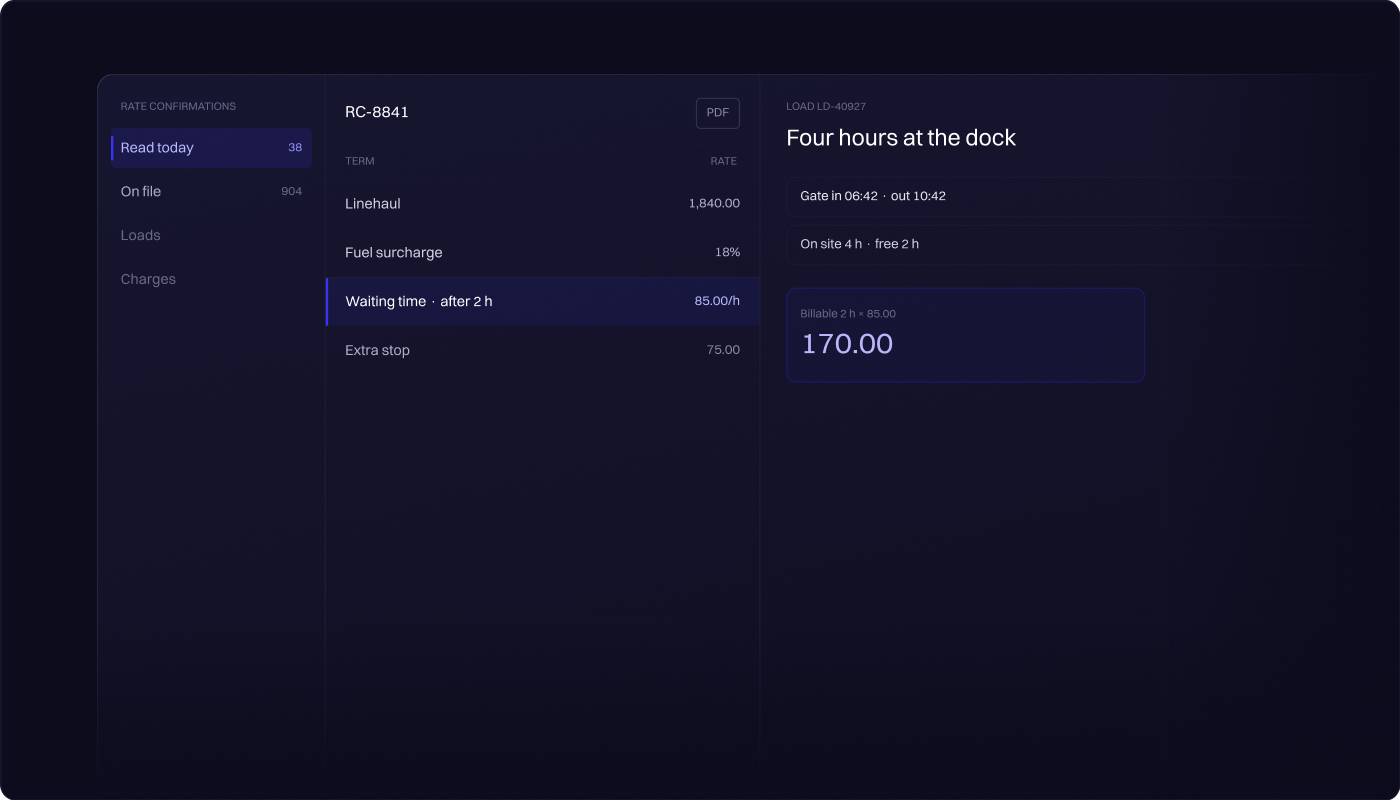
Your rate confirmation prices waiting time. The gate log says the truck sat four hours. One of those facts is worth $170, and it only counts if someone writes it down.
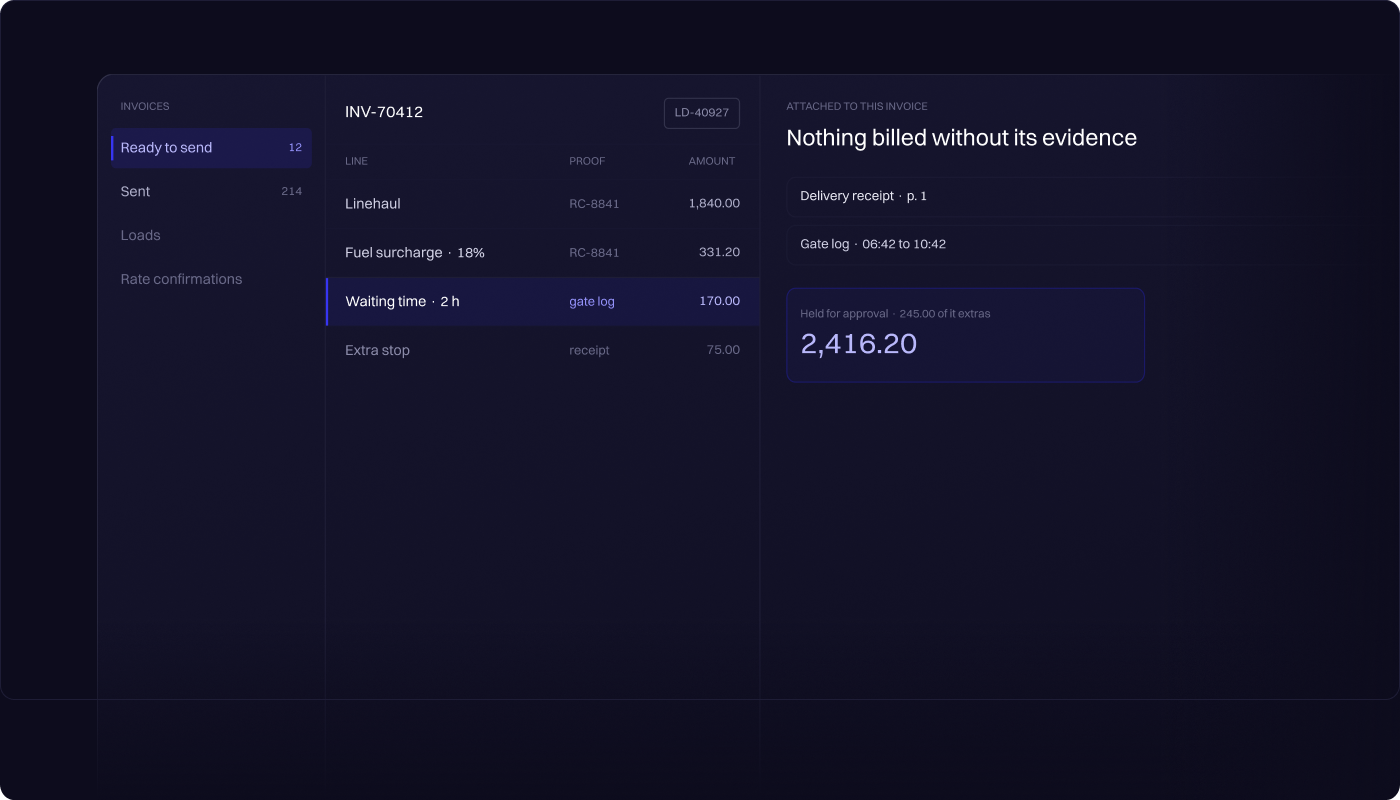
The waiting charge goes out with the gate log behind it and the signed receipt attached. The same file answers a short-pay six weeks from now.
Copyright © 2026 Nexigence AI, Inc. All rights reserved